Legends -B
Back to Legends part A
"The Red Ball Express" continued:
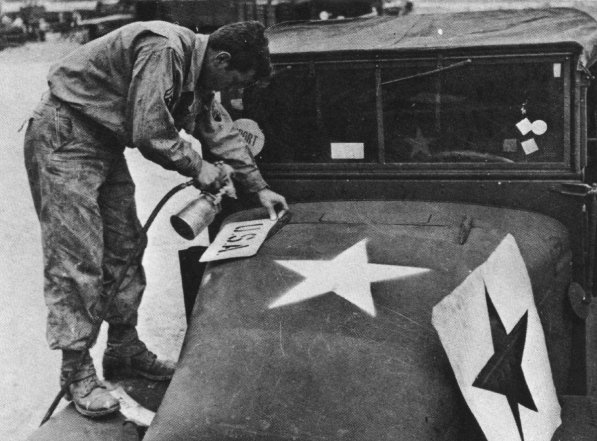
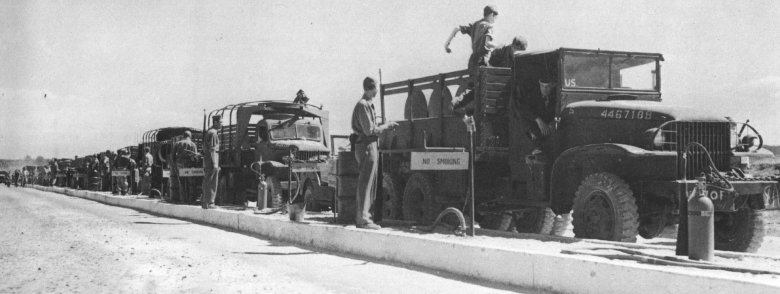
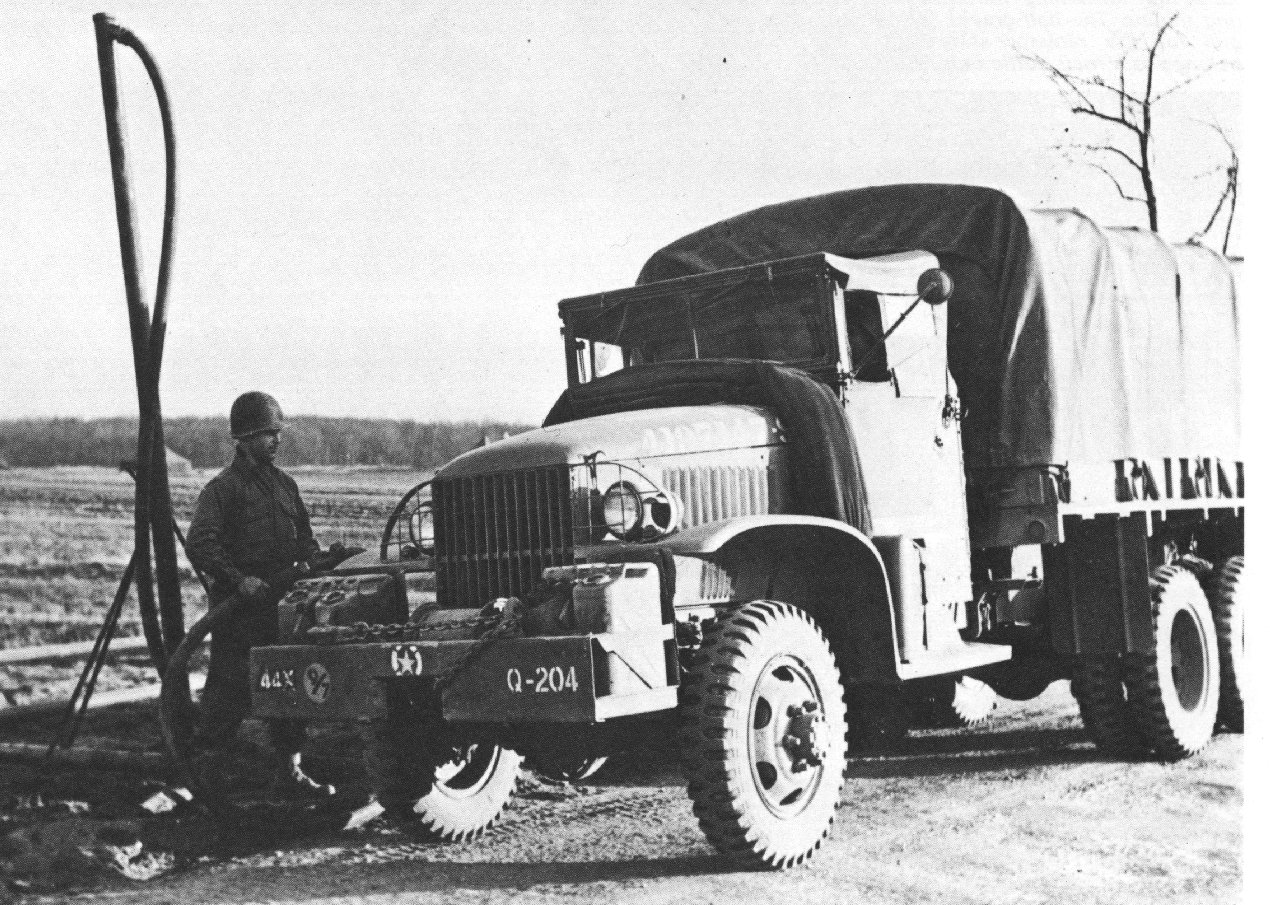
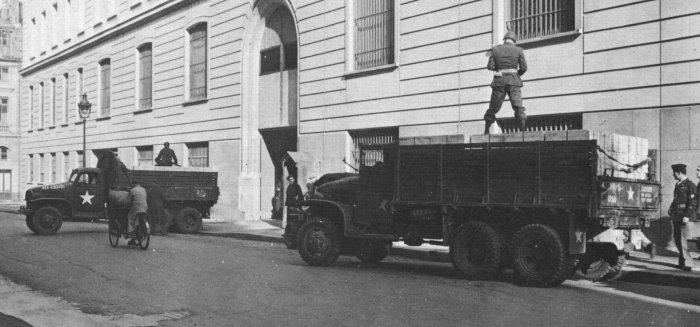
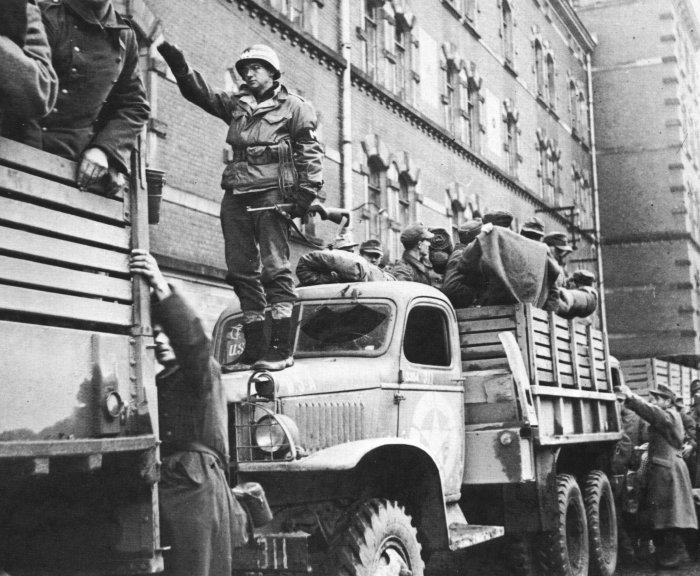
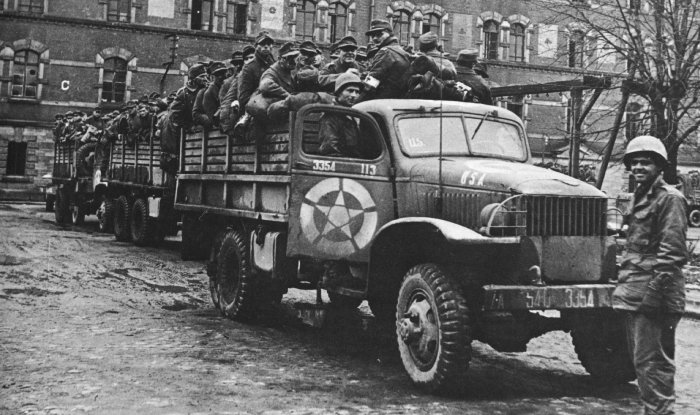
On chosen itineries exclusively reserved for military transport, the Engineer Corps reconstructed civil engineering works including bridges, installed vehicle servicing areas, fuel supply points, and rest centers for drivers.
More than 25,000 bilingual indicator boards marked the route. At the beginning it only went from St. Lô to Chartres, but by mid-November it involved more than 1,100km of organised highways. In addition, specialised Engineer Corps and Transport Corps units, three battalions of Military Police, one Infantry Regiment and numerous French policemen ensured that the operation proceeded smoothly.
During the 81 days that the "Red Ball Express" was in existence, 416,586 tons of supplies were transported, i.e. a daily average of 5,143 tons. The largest daily tonnage was achieved on August 29th with 12,540 tons.
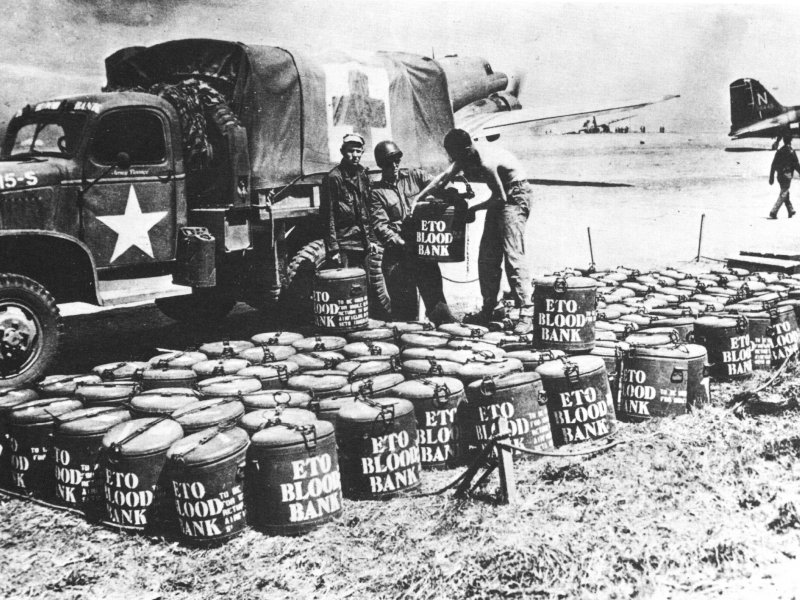
Other not so wide ranging operations materialised bwetween September and December 1944. Their purpose was likewise to transport fuel, munitions, spare parts and miscellaneous equipment. The "Green Diamond" operation (from October 14th to 31st) permitted 15,840 tons of rations and munitions to be transported between Cherbourg and Dol. The "Lions Express" operation (September 16th to October 12th 1944) permitted transportation of 17,836 tons of gasoline, coal and munitions. Even more important, the "White Ball Express" (October 6th to December 13th 1944) shipped 142,733 tons of supplies from Le Havre to Paris.
extract from "The Red Ball Express" p119 GMC, The Universal Truck.
Some further details from another book:
Between August 25th and September 6th, over 6000 trucks were used to deliver 81,614 tons of supplies in the US sector alone. Dubbed "The Red Ball Express" from a US railroad term for fast freight, the trucks picked up supplies at St. Lô, close to the Normandy beaches, before travelling on a one-way loop highway to Chartres (for US 1st Army) or Dreux (for US 3rd Army) and back again.
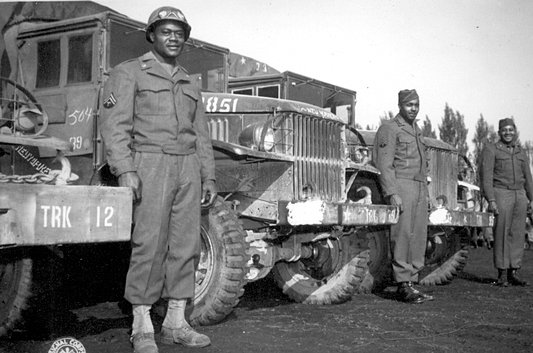
The drivers competed to see who could finish the journey in the shortest time, ignoring all the rules of the road; as one British soldier put it, the only way to escape oncoming US trucks was to 'not only get off the road but climb a tree'. But the price was high. Not only did the trucks use 1,137,00 litres (250,000 gallons) of petrol a day just to keep moving, but the wear and tear on men and vehicles was considerable... Trucks raced day and night for 81 days around the 1120km (700 mile) circuit. The drivers, mainly black privates in the US Transport Corps, had to push the vehicles beyond their limits. Mechanics worked around the clock.
extract from "Rough Road To The Rhine", The Illustrated History WW2 -p316 publ. Reader's Digest.
Picture credits Home | Intro | Legends | Makes & Models | Typical story | Lend Lease | Motor Pool | The Register |